
5 historic sites, 1 cycling route

Updated: Sep 10

A day of history and fantastic cycling
My Chartres-to-Paris route passes so many historic sights that I wanted to create a slight variation that fully captures four of them for a perfect day of exploring and cycling. While each destination would warrant a trip on its own, linking them together makes for a great taste of French history and countryside.
The route begins with an easy train ride out to Chartres. If you haven’t taken a train with your bike in France before, I have another post with a complete guide. For this particular trip, it’s simple: a TER regional train that doesn’t require a bike reservation. Trains leave roughly every hour from Gare Montparnasse and take just over an hour. Once you arrive, you’ll ride less than a kilometer before reaching the first of four historic sites on the way back to Paris.
Chartres
Located less than 90 km southwest of Paris, Chartres is home to its world-famous cathedral. During WWII, the city suffered bombing, but the cathedral was spared thanks to Colonel Welborn Barton Griffith Jr., who disobeyed orders to destroy it. Instead, he personally inspected the building with another soldier, confirmed it wasn’t being used by the Germans, and saved it from demolition.
Because of this, we still have one of the best-preserved Gothic cathedrals in Europe, with much of its original stained glass and structure intact. Construction of the current cathedral began in 1194, though earlier churches stood on the site. The Cathedral is free to enter and is breathtaking from the outside as well as the inside. The city itself offers more, including a cute market on Wednesdays and Saturdays, but with three more stops and 100 km ahead, you may want to keep focused on the cathedral.
Maintenon
The next stop is the village of Maintenon, home to the Château de Maintenon, with its rich and colorful history. The château was originally built in the 13th century and later expanded in the 16th. It is most famous as the residence of Françoise d’Aubigné, Madame de Maintenon, the secret wife of Louis XIV.
The château requires a ticket to enter, but you can admire it from the road and see the remains of the massive aqueducts built to bring water to Versailles’ fountains. For a quick stop, you can purchase a gardens-only ticket (about €3) to enjoy a short stroll with great views of both the château and its grounds.
Rambouillet
The third stop is Rambouillet, home to another historic château. Dating back to 1368, the Château de Rambouillet became a favored hunting retreat for French kings over the centuries. After the Revolution, it passed into state ownership and served as a presidential residence.
In 1944, just days before the Liberation of Paris, Charles de Gaulle used Rambouillet as a base of operations. Since then, it has hosted foreign dignitaries and international events, including the first G6 summit in 1975. You can view the château and its gardens from outside, or purchase tickets to tour the interior.
Versailles
The next and most famous stop is the Château de Versailles. Originally built by Louis XIII as a hunting lodge, it was transformed by Louis XIV into the seat of royal power and a symbol of absolute monarchy. Versailles remained the royal residence until the French Revolution, when Louis XVI and Marie Antoinette were forced back to Paris in 1789.
After the Revolution, Versailles continued to play a role in French and world history, famously as the site of the signing of the Treaty of Versailles in 1919, which ended World War I.
Versailles is a destination in itself, and worth returning to for a full tour of the palace and gardens. But even on this ride, you can admire the gilded façade from the front, or cycle around the Grand Canal for sweeping views of the château and its gardens.
The Route and Final Stop
The total route is just over 100 km and offers a mix of smooth roads, forests, and historic sites. It takes you directly in front of all four châteaux, with opportunities to explore more if you wish—especially in Rambouillet and Versailles, where you can ride through the surrounding parks and canals.
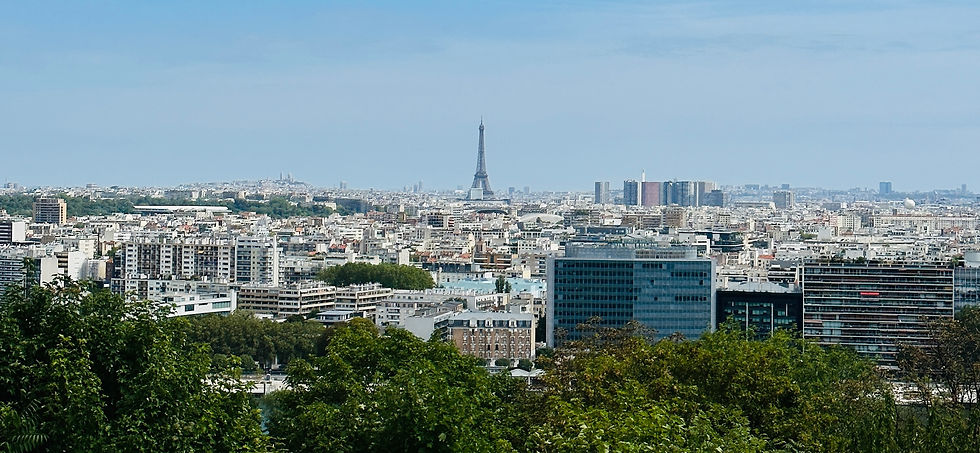
After Versailles, the route heads back to Paris via the Parc de Saint-Cloud, which offers a bonus: one of the best panoramic views of the city and a view of the final site, the Eiffel Tower. No matter how many times I’ve seen it, that perspective never gets old. You will also get an up close view of the tower on your way back.
From there, like most of my routes, it drops down to the Seine and follows the river back into the Marais, finishing at Le Peloton Café for a well-earned coffee after a full day of cycling and exploration.
Like this route? Help us support site costs by buying us a coffee!



Comments