
Bike Check Basics

Whether you’re new to cycling or a seasoned rider, it’s always worth giving your bike a quick once-over before heading out. For many people this eventually becomes second nature, but here’s a simple checklist to help build that habit.

A.B.C.D. (Air, Brakes, Chain, Damage)
The first, and most likely, thing to need adjustment is your tire pressure. The ideal pressure depends on your setup, but make sure you have enough air before every ride. The tire sidewall will list the manufacturer’s recommended minimum and maximum pressures, which is a good starting point. As you get deeper into cycling, you’ll probably start optimizing pressure more carefully. You can read more about my tire preferences and pressure calculator recommendations here.
Next, and arguably more important, are your brakes. Whether you have rim or disc brakes, make sure they’re functioning properly, have enough pad life remaining, and aren’t rubbing. I usually start with a visual inspection of the pads, then spin the wheels to check for rubbing, and finally squeeze the brakes while pushing against the bike to make sure they engage correctly.
If you have rim brakes, adjustments are generally simple and quick, though they tend to need more frequent attention. Disc brakes usually require less maintenance day to day, but if they start feeling soft or inconsistent, you may need to visit a shop or level up your maintenance skills and tools.
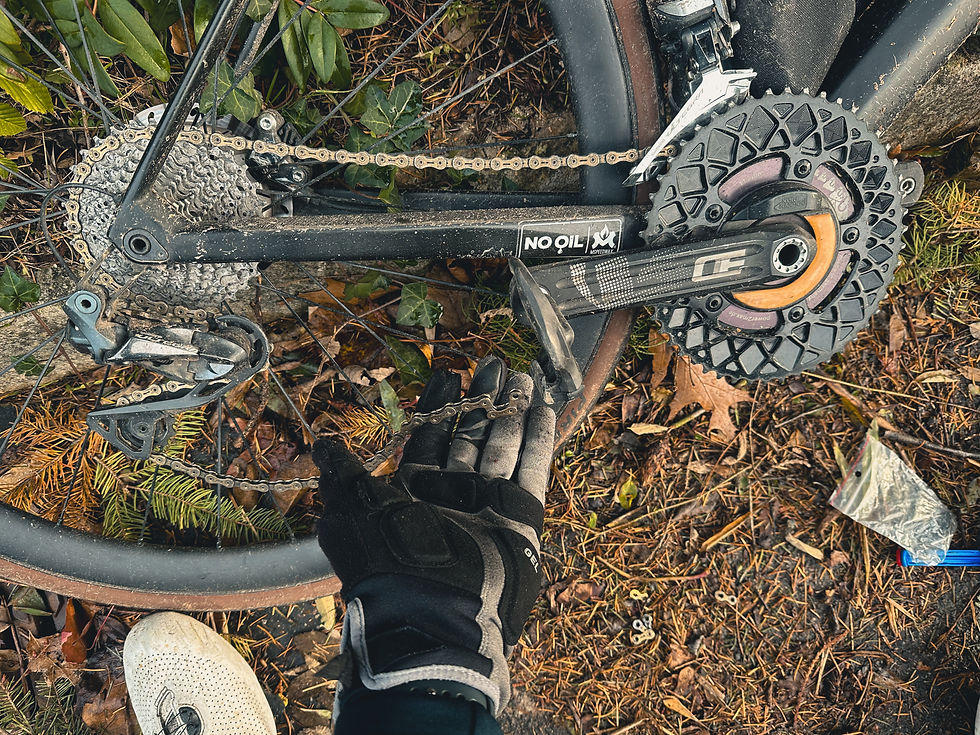
Your drivetrain, especially the chain, is another high-wear area. While it takes quite a while to wear a chain to the point of failure, riding with a squeaky drivetrain gets annoying fast. Keeping your chain clean and lubricated is one of the easiest and most important things you can do for your bike. There are plenty of lube options, including waxing, which is a personal favorite of mine, but regardless of what you use, make sure the chain is clean and properly lubed before heading out.
Lastly, I always like to give the bike a quick visual inspection for damage. This includes rotating the tires and checking for cuts or gashes that could turn into flats later, as well as looking over the frame for any signs of damage, especially if it’s carbon fiber. I also spin the wheels to make sure they’re true and squeeze pairs of spokes to confirm there’s tension throughout and nothing is broken.
Loose Parts Are Less Fun
I like to pick up my bike and drop it a few centimeters off the ground to listen for rattles. Loose parts eventually fall off, damage other components, or at the very least create annoying noises. I can’t stand mystery sounds while riding.
Keeping your wheels attached is also fairly important... If you have quick releases, make sure they’re fully closed and properly tensioned. If you have thru-axles, give them a quick check with your multi-tool before setting off.
A loose headset is another fairly common issue that can lead to expensive problems. The headset contains the bearings for your fork and handlebars, so if it loosens up, it affects steering and can potentially damage the frame.
To check it, hold the front brake and rock the bike back and forth. There shouldn’t be any movement or knocking. If you do feel movement, place your fingers at the base of the stem to determine whether it’s coming from the headset or somewhere else. If the headset is loose, make sure you know how to tighten it properly or take it to a shop. Overtightening can damage the bearings just as easily as leaving it loose.
Check Your Spares

Nothing is worse than thinking you’re prepared and realizing halfway through a ride that you forgot to replace your spare tube after your last flat. It’s always worth quickly checking that all your essentials are actually there before heading out. You can read more about what I carry and where here.
A Few Minutes Can Save You Hours
Taking a few minutes to run through these checks can save you a lot of time, frustration, and potentially some skin on the road. Over time, these habits become automatic, and they go a long way toward making sure every ride starts smoothly.


Comments