
The Bright Midnight Gear List: What I Packed for 1,100km Self-Supported

Self-supported means exactly that; whatever breaks, runs out, or gets left behind is your problem to solve, alone. If you've read the personal recount, you already know a few of the moments where this list either saved me or came up short. Here's everything I carried for four days across Norway, organized by where it actually lived on the bike.
The Bike
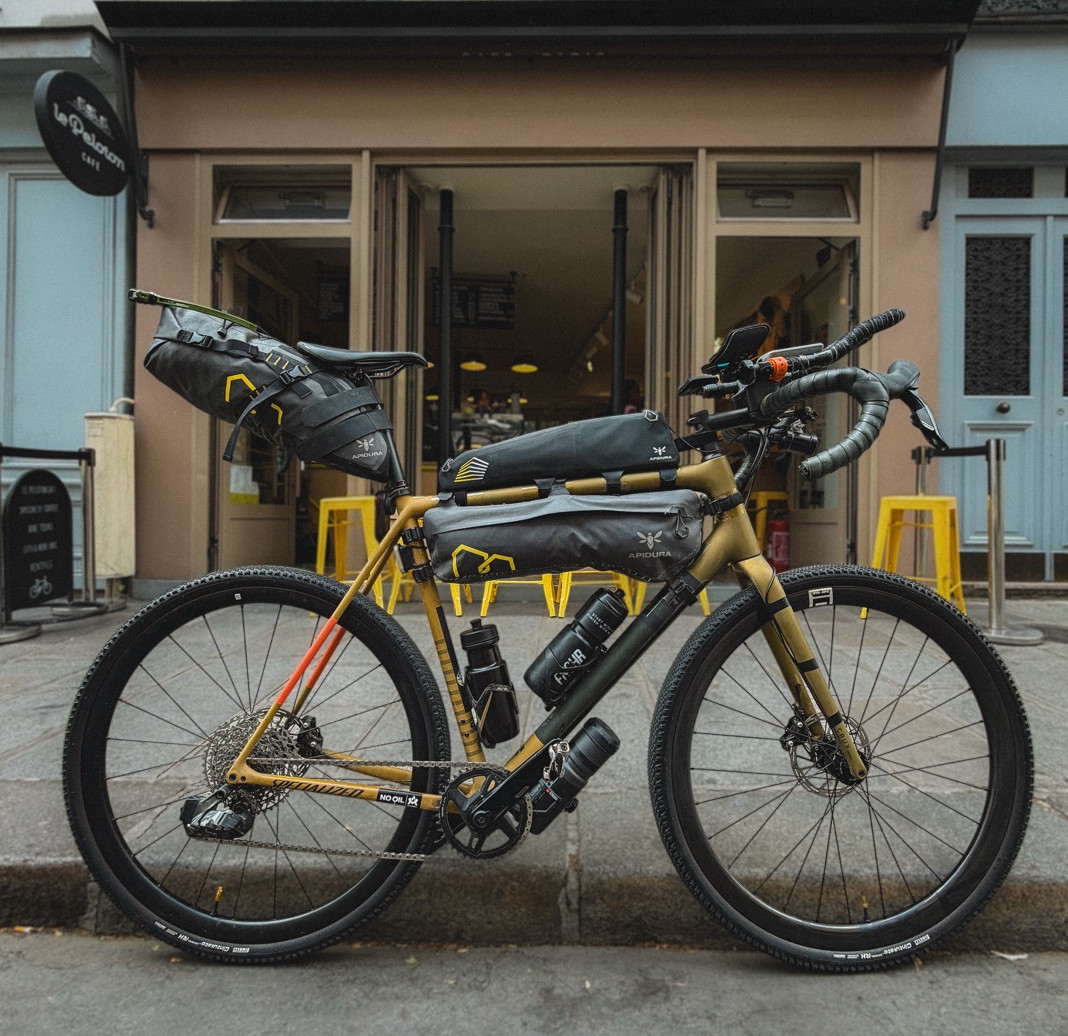
2024 Cruz Expert
SRAM Rival AXS
SON 28 dynamo
45mm Pirelli Cinturato RH Tires
PRO Missile aero bars
Sinewave Beacon 2
Shimano XT pedals
The dynamo hub paired with the Sinewave Beacon 2 was doing double duty: lighting and charging. I could have easily had enough light battery with my exposure light but I did not want to think or stress about charging things while making a big push.
Wearing

Coros Apex Pro 2
Velocio Lux v2 bibs
Le Peloton Cafe jersey
Arm warmers
Gilet
Light full-finger gloves
Petzl Nao RL headlamp
Shokz OpenRun Pro2
Julbo Density glasses
Giro Vanquish helmet
Socks
Merino base layer
Shimano XC7 shoes
I did not expect quite as much hike-a-bike so more flexible shoes would have been a better choice. Otherwise everything else here was prefect.
Vest (Salomon ADV SKIN 12)

Rain jacket
Overshoes
Overpants
500ml soft flask
500ml soft flask + filter
High-viz reflective piece
The pack itself was not very full, but the main reason I had it was to load and access snacks easily while on the course. I never needed or even fully filled my water capacity, but you never know, and soft flasks take up no space. The only thing I would change here is to have a rain jacket that fits over the top of my pack. I was constantly putting on and taking off my jacket, which was more hassle with also having to take on and off the pack. I have a trail running jacket that has a specific expansion for just that, but I was worried it would not have been waterproof enough. I spoke to another rider with the same Gore jacket as me; he had just sized up one size and was able to wear it over the top.
Frame Bag (Apidura Expedition 5.3L)

Emergency blanket
Leg warmers
Down jacket
Headband
Buff
Winter gloves
Glove liners
Musette
Multi-tool
Dynaplugs
Sun cream
Chamois cream
Toothbrush
Toothpaste
Bandaids
Toilet paper
Moleskin
Sleep mask
All of the cold weather kit got much more use than I expected, other than the socks. I had mainly packed those to change into while bivvying (which I did not end up doing). A musette is something I have found super useful when bikepacking and racing. On this race, I used it often to load up with groceries and transport them to the hotel, but also used it to bring items from my frame bag and top tube bag. I couldn't or didn't need to bring my bike inside at any of the accommodations, so being able to bring things in and out easily helped save some time. Everything else was luckily just there in case. I would rather carry something and not use it rather than not have it and end a race early.
Top Tube (Apidura Race 2L)

Gels
Electrolytes
Drink mix
SRAM AXS battery + charger
5,000mAh battery pack
Charging cables
Petzl Nao RL battery
3-port USB charger
I only needed a small battery pack that acted as a passthrough buffer to the dynamo. I was able to keep up on charging everything with no problem on this trip. I consumed all of the gels and sports drink mix but not all of the electrolytes. At almost every resupply, there was Gatorade, so that covered me.
Saddlebag (Apidura Expedition 14L)

SOL bivy
Sleeping pad
Sleeping bag
Sleeping bag liner
Inflatable pillow
Shorts
T-shirt
Base layer tights
Thermal long sleeve
Hip lock
Wool socks
I'd planned to bivy the route with this kit and never actually used it. Every stop I made ended up being a hotel, hut, or basecamp bed instead, mostly because the weather and my own state at each decision point kept pointing that way. I don't regret carrying it. Not having the option would have taken away some of the flexibility that let me make calls like pushing through to the ferry instead of stopping short.
Tool Bottle + On the Bike
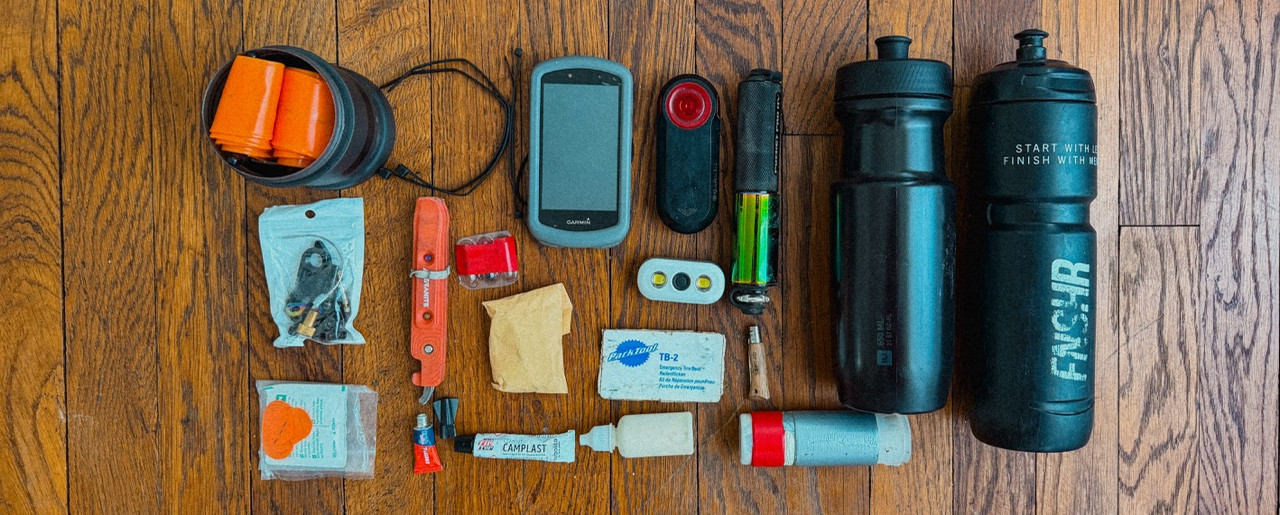
Garmin Varia Radar
Decathlon USB rear light
Garmin 1030+
Mous phone mount
800ml + 650ml bottles
Lezyne Pocket Drive HV
2x TPU tubes
Tire lever w/ chain pliers
Mini knife
Derailleur hanger
Presta-to-Schrader adapter
Sealant
Extra Dynaplugs
SPD cleat bolt
2x brake pad sets
Valve core
2x quick links
Super glue
Tube patch kit
Tire boot
Hook needle + thread
Zip ties
Tape
CR2032 batteries
Squirt chain lube
Electrical and duct tape
I used a Topeak Escape Pod tool bottle mounted in an Elite Struka cage on the underside of my down tube. The cage has a boa which worked great to keep the bottle secure and in place the whole time. The bottle has 2 compartments, so things were split up a little bit, but if you need something at the bottom, you need to basically dump it all out. Luckily, I didn't need to access much of this, and overall it worked well.
What I'd Change
The short answer is not a lot, and I was thrilled that was the case. As I mentioned before, I am a firm believer in having something and not needing it vs. the alternative, but I also feel that I did not overpack. The only real change I would make is to my gear ratio. I ran a 40T up front with a 10-44T in the back, but on steeper, longer climbs, I often found myself grinding just outside my comfort zone or hiking on a gradient that could have been rideable. While that range could cover you with fresh legs and an unloaded bike, that was not the case for this race. Many people ran mountain bike derailleurs with bigger cassettes, which is an upgrade I plan to have on hand for the future.
For everything else, this list did what it needed to do. If you want the story behind where and when most of it actually got used, that's the full personal recount, and if you're new to the event itself, start here for what the Bright Midnight actually is.


Comments