
Cycling Mont Ventoux: A Guide to the Climbs, Routes and Where to Stay

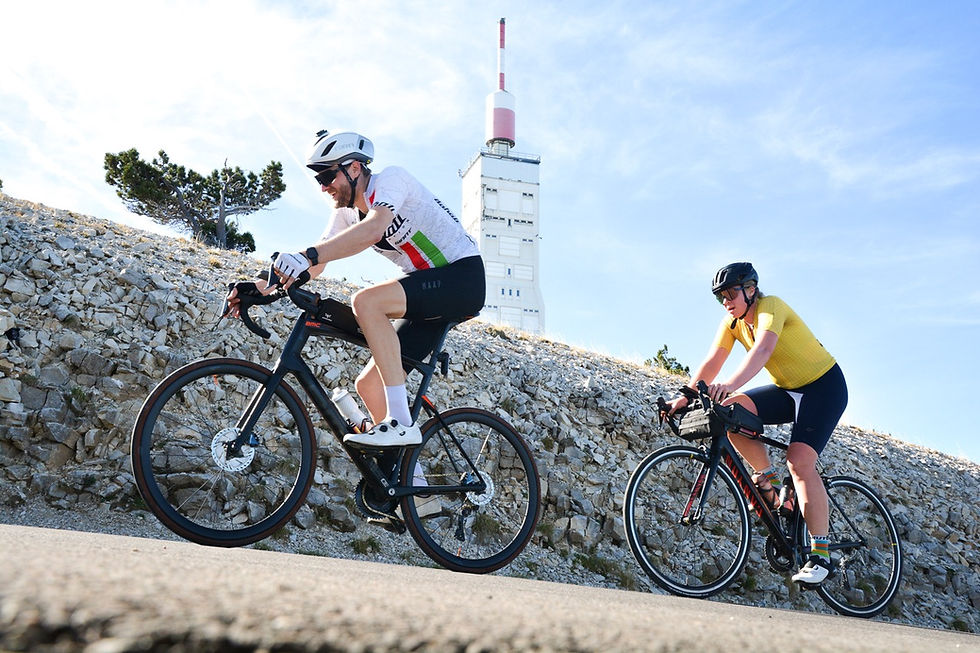
At 1,910 metres, it is not the highest mountain in the Alps or even close to the highest road you can ride in France, but there is just something that draws cyclists to Mont Ventoux. It stands almost completely on its own above Provence, the summit is exposed to the elements, and its white, rocky upper slopes look like they belong somewhere on another planet.
It also has one of the deepest histories in professional cycling. The Tour de France has been coming back to the mountain for decades, and for many cyclist, riding to the summit is a bucket list challenge in its own right.
I've now ridden all three roads to the top, across two trips. My first visit was in September and gave us almost perfect conditions. My most recent trip was in late October and was a very different experience. We went with the goal of riding all three sides, but the weather had other plans.
That experience probably changed how I would recommend planning a Ventoux trip. If you're coming specifically to ride the mountain, give yourself at least two days where you could climb. The weather at the summit can be very different from the weather in the valley, and sometimes the smartest thing you can do is not climb it at all.
Why Mont Ventoux?
There are plenty of famous climbs in France, but Ventoux has been a part of the Tour de France since 1951 and has produced some of the race's most memorable moments. Tom Simpson died on its slopes during the 1967 Tour, while later generations saw battles involving riders such as Eddy Merckx, Marco Pantani and Lance Armstrong.
More recently, the mountain produced one of the strangest moments in Tour history when Chris Froome was forced to run up the road after crashing into the crowds in 2016. Wout van Aert won at the summit in 2021, and the mountain continues to feature regularly in the Tour.
The history is no longer just about the men's race either. In 2026, the Tour de France Femmes made its first full summit finish at Ventoux, with Kasia Niewiadoma-Phinney winning the stage and taking the yellow jersey.
That history is part of the reason people travel from all over the world to ride here. You aren't just climbing a difficult mountain. You are riding somewhere that has been part of cycling culture for generations.
The three ways up Mont Ventoux
There are three roads to the summit, and while they all finish at the same place, they feel quite different.
Bédoin
21.8 km, 1,598 m of elevation, 7.5% average gradient
This is the side used for the famous Tour de France climbs and probably the one most people picture when they think about riding Ventoux.
The climb starts almost immediately when you leave Bédoin, so if you're staying in town, don't expect much of a warm-up. The gradient is relatively consistent, which is actually one of the reasons I like it. There aren't as many changes in rhythm as Malaucène, so you can settle into a pace and keep going.
The lower section takes you through the forest before the landscape changes dramatically as you approach Chalet Reynard. From there, the final kilometres are exposed and the famous white landscape starts to appear.

It is also where the weather can become a real factor. The summit is much more exposed than the lower slopes, and the last few kilometres can feel like a completely different ride.
Malaucène
21 km, 1,575 m of elevation, 7.5% average gradient
Malaucène is very similar on paper with nearly the same specs, but it feels quite different. There are more changes in gradient than on the Bédoin side, which means you don't quite get the same steady rhythm. While the average grade is the same, there is a middle section where you get over 10% continuously for 3 full kilometers, with several individual ramps maxing out around 12% to 13%

The approach to the summit is particularly beautiful, with more switchbacks and some great views as you get higher. This is the side I would want to ride if I only had one day and wanted the best overall riding experience.
Sault
25.6 km, 1,210 m of elevation, around 5% average gradient
At 25.6 km, it is actually the longest route to the summit, but with only around 1,210 metres of elevation and a roughly 5% average gradient, the first part is much more manageable.

The important thing to remember is that it doesn't stay easy. Once you reach Chalet Reynard, you join the final section of the Bédoin climb, so you still have the same exposed final kilometres to deal with.
I wouldn't make Sault my choice for a one-day Ventoux trip unless I was staying on that side of the mountain. But it is a great option as part of a bigger loop, when you combine it with the Gorges de la Nesque.
Where to stay
If you're coming primarily to ride, I'd stay in Bédoin. It is the obvious cycling base, with plenty of cyclists around, bike-friendly accommodation and easy access to the south side of Ventoux. There are also plenty of Airbnb-style options, and many of the houses around the area have pools and views over the surrounding countryside.
I've also stayed in Caromb, which worked perfectly well from a cycling perspective. It's not far away and gives you plenty of options for riding in the area, but it doesn't have quite the same cycling atmosphere as Bédoin.

There are plenty of other towns and villages around Ventoux, so you don't have to stay directly at the base of the mountain. If you're planning to spend several days riding, I would prioritize having a comfortable place to stay over being right next to the climb.
For timing, I'd aim for late spring or early autumn. Summer can be hot in Provence, while the shoulder seasons give you a better chance of comfortable temperatures for long climbs.
Getting to Mont Ventoux from Paris
Getting to Ventoux from Paris by train is pretty easy. The simplest option is a TGV to Avignon, followed by a regional train to Carpentras. From Carpentras, you're looking at roughly 20 km of riding to reach the Ventoux area. The ride is short and easy enough that you can easily throw a bikepacking saddle bag and a loaded backpack to carry more than enough stuff for several days of adventure.

This TGV line does require bikes to be "disassembled" but that just means you need to bring your Fairmean bag. For more info on bringing your bike on French trains, read the full write up here.
Three rides I'd recommend
I've ridden all three sides of Ventoux now, and if you're coming for a few days, these are the routes I'd choose.
1. Climbing Malaucène to Sault and the Gorges de la Nesque
If you only have one day to ride, I suggest you combine a Ventoux climb with some of the best scenery in the area.
With this route starting in Bédoin, it gives you a bit of a warm-up before you get into the serious climbing as you head towards Malaucène and begin the climb to the summit. The warm-up is nice for the legs and provides great scenery along the way.
The upper section is one of my favourite parts of riding Ventoux. There are more switchbacks than on the Bédoin side and the views are excellent. From the summit you make a fast descend towards Sault. It's a good place to stop for lunch or at least stock up on food before continuing towards the Gorges de la Nesque.
The gorge is often overshadowed by Ventoux's popularity but I think it's a must do and a great way to finish the ride. The road winds through the canyon landscape and tunnels with very different views than the morning climbing Ventoux.

2. Climbing Bédoin to Malaucène and La Barroux
If you have two days for climbing, this is the route I'd use for the classic Bédoin experience with a little twist.
Starting in Bédoin you climb straight to the summit with its consistent grinding grade. While you could turn around and out-and-back if you're short on time, I recommend adding this Malaucène loop. The advantage of doing the loop is that you get to experience both sides of the mountain without simply turning around and riding the same road back down. La Barroux is also a nice place to ride through, with the castle providing a nice landmark and a few options to stop for food or coffee.

3. The 36 km Ventoux warm-up loop
You don't need to climb Ventoux every day. This 36 km loop from Bédoin through Malaucène and La Barroux is a good opener before attempting the mountain, or an easy enough recovery ride between harder days.
There are plenty of places to stop for food and coffee, and the route gives you a chance to see more of the area without putting a big effort into the legs. It's also the route I'd keep in my back pocket if the weather isn't cooperating. On my most recent trip, that turned out to be particularly useful.

Give the weather some respect
This is probably the biggest thing I'd change about how I plan a Ventoux trip now.
On my first trip, I visited in September and had excellent conditions. It was a little windy one day, but nothing that stopped us riding. My most recent trip was in late October and was completely different.
On our first day, it was around -2°C at the summit with winds approaching 100 km/h. Rather than trying to force a climb in those conditions, we rode the shorter loop around Bédoin, Malaucène and La Barroux.
The next day looked better, so we went for it. We managed two climbs, but by the time we reached the summit the wind had increased to more than 50 km/h. Temperatures were in the single digits and rain was starting to move in. At the top of the second climb, the wind was strong enough that we were nearly being blown off our bikes. That was enough of a signal for us and we decided to call it, get back down safely and save the triple for another trip.
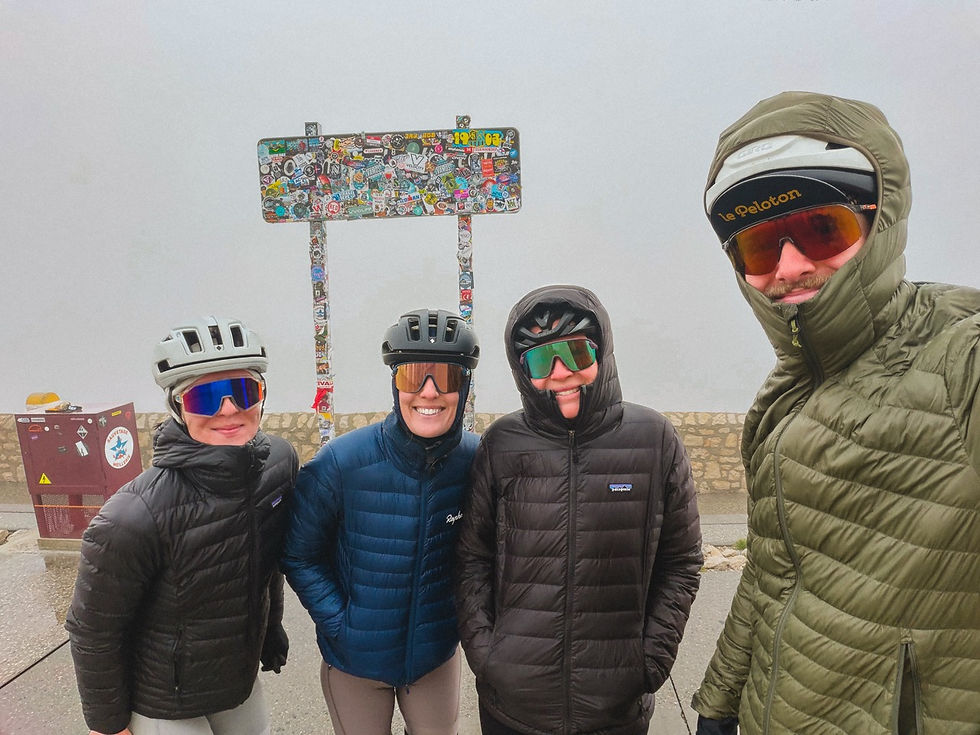
And that's probably the most important piece of advice I'd give anyone planning a Ventoux trip: give yourself options. If riding the mountain is the main reason you're going, I'd plan for at least two days where you could climb. That gives you the flexibility to move things around if the wind is too strong or the weather turns.
The triple Ventoux
Once you've ridden one side, it's hard not to start thinking about the others. And once you've ridden all three, the obvious next challenge is to do all three in one ride.
The triple Ventoux is exactly what it sounds like: climbing the mountain from Bédoin, Malaucène and Sault in the same outing. Called the Cinglés du Mont Ventoux Club, there is an official challenge with stamp books to collect stamps from local vendors at each base and the summit. I went to Ventoux with that goal on my most recent trip, but the weather stopped us after two climbs. I'm going back next year to finish it, so you can read more about it after I have successfully finished it.
For a first trip, you don't need to worry about riding all three sides. Pick a route, enjoy the mountain and spend some time exploring the roads around it. If you get hooked, there is always another TGV and climb waiting for you.



Comments