
The Route Behind The New York Times' "Normandy on Two Wheels"

Updated: 3 days ago
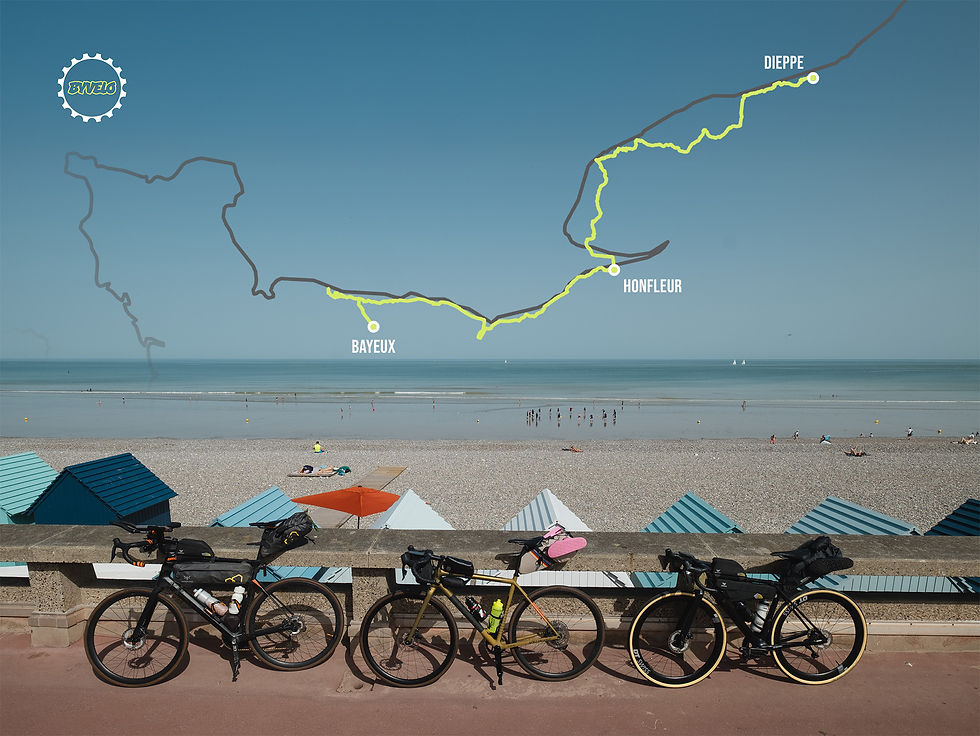
My friend Sophie was hired to write an article for the New York Times about cycling in Normandy and she asked for my assistance in creating an interesting route. When many people think of Normandy they often envision the WWII beaches, which are indeed significant to its history, however there is so much more to explore in this beautiful region. From breathtaking chalk cliffs to picturesque fishing villages, and an abundance of cider to sample—Normandy is one of France's largest cider-producing areas.
We aimed to design a four-day trip for the article that included easy riding days and opportunities to linger in charming locations, but we also wanted the route to be adaptable for more avid and adventurous cyclists, allowing it to be completed in just two days. My goal was to create a route featuring good roads, a selection of towns worth stopping in, and visits to several historic WWII sites along the way.
While cycling along the coast, it's important to consider the wind, although it's difficult to predict how it will behave on any given day. We chose to plan our route from east to west for logistical reasons, but based on my experience riding the coast in both directions, I wouldn't say one is consistently better than the other. I've had just as many headwinds riding east to west as I have west to east, so I wouldn't plan the route around the assumption of a favorable wind.
You can read the full New York Times piece for the town-by-town details, restaurant picks, and recommendations on where to stay. This post is about the route itself, specifically in the two-day format we actually rode it in and to answer some of the questions people posted in response to the article.
Day 1: Dieppe to Honfleur
The route rolls out of Dieppe train station and heads towards the beach. The first 28km snake along the chalk cliffs, climbing up and down and providing fantastic views along the way. From there, you cut south and head inland towards Fécamp, passing through farmland and along the paved Véloroute de Lin. Fécamp makes for a great lunch and resupply stop, just past the halfway point of the day.
From Fécamp, the route continues along the coast for another 20km to Étretat, with its stunning cliffs and famous arches. From there, you cut south towards the busy port city of Le Havre. The route takes a more direct line through the city to avoid adding extra mileage, before reaching the Seine and the Normandy Bridge, the main crossing into Honfleur.
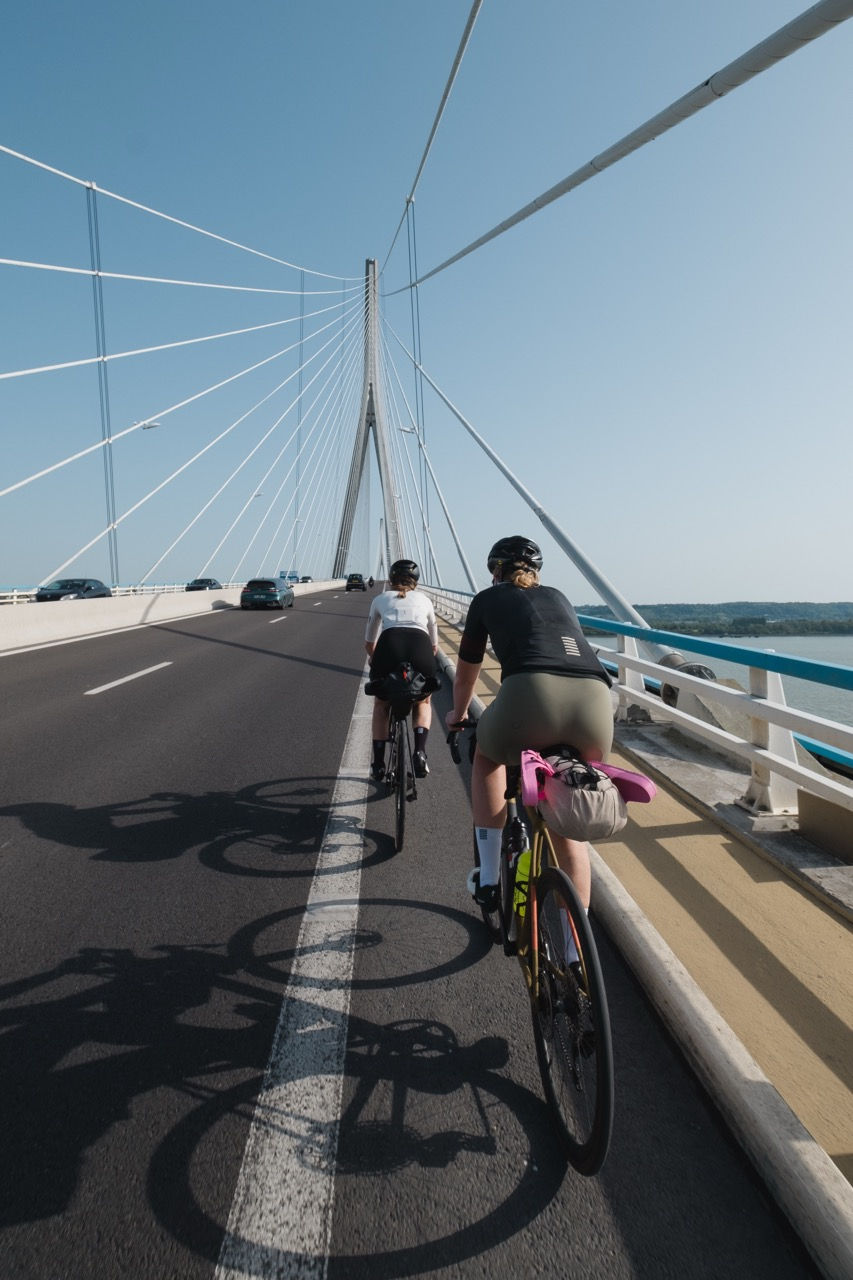
Be prepared for this bridge. While there is a bike lane, traffic passes fast and the arch of the bridge is enough for Garmin to consider it a climb. Coming from Los Angeles, I am still accustomed to cars flying by, but it can be a little unnerving for some. You are also quite exposed to the wind, so be ready for a gust or two while riding across.
Day 2: Honfleur to Bayeux
The first 12km leaving Honfleur follow the coast, climbing up before dropping down into Deauville. There can be a lot of traffic in the summer and weekends entering the city but it is just an inconvenience, not a danger.
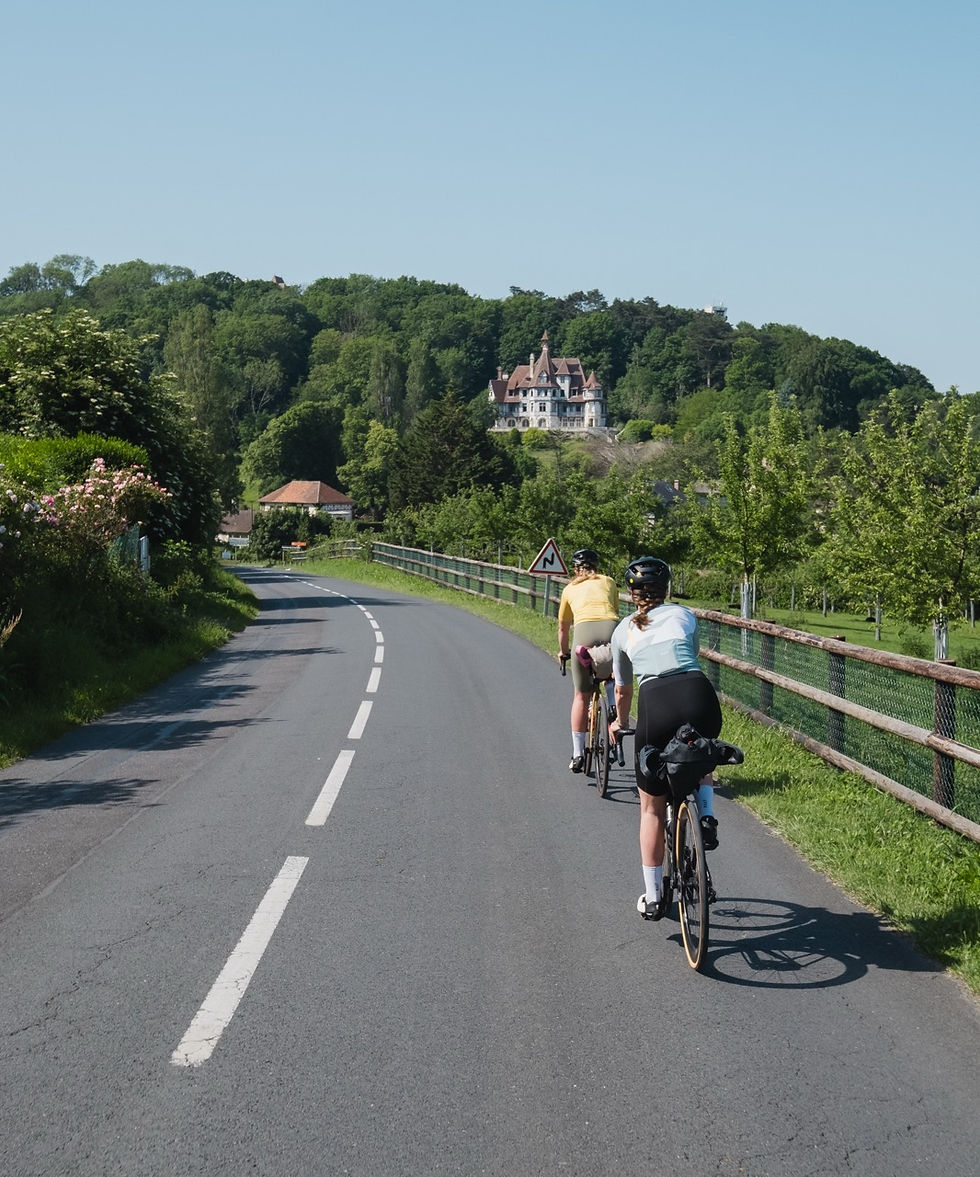
After getting through town, you cut back inland briefly for one of the "biggest" climbs of the trip, although it's just 2.3km at 5%, so it's very manageable. From there, it's pancake flat for 50km. There is an unpaved section around 42km in, but it is super hard-packed champagne gravel and 100% manageable on any road bike. If it's a deal breaker for you, you could continue on the D road and rejoin the bike path once it is paved.
The route follows the bike path along the coast to Lion-sur-Mer, which is a great halfway point for lunch and a resupply. Some stretches of the bike path along Sword Beach can be a bit sandy, so you might opt to take one of the roads that parallels it but you may miss some of the memorials dedicated to the British soldiers who landed here on the furthest east section of the D-Day invasion.
The route continues along the coast, passing Juno Beach, where the Canadians landed during the invasion. After that, you climb up to get a sweeping overlook of Gold Beach, another British-led D-Day beach. There are several memorials and an observation platform just meters off the route that are worth stopping at.
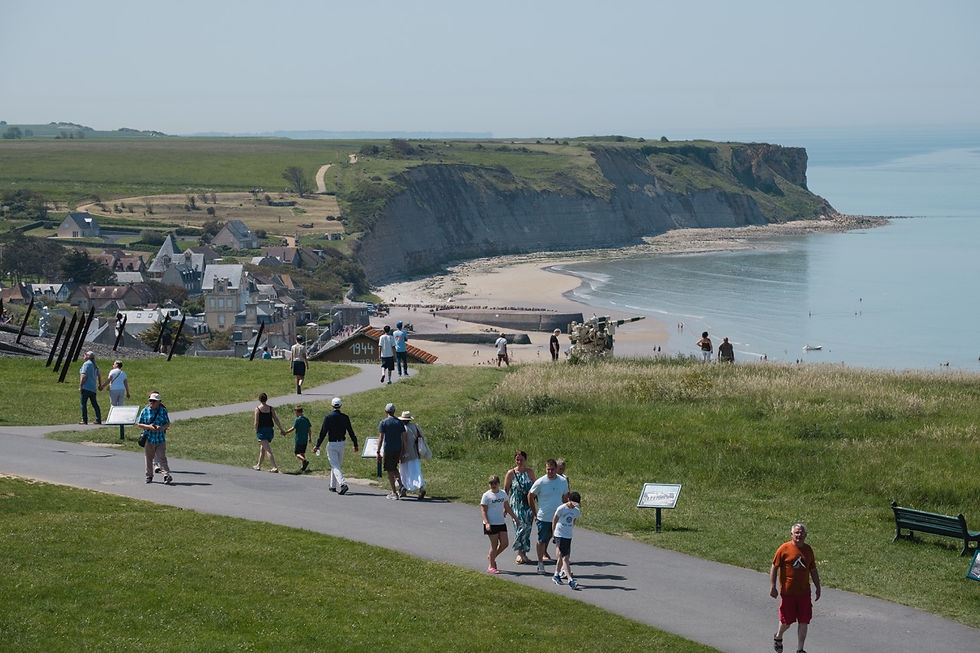
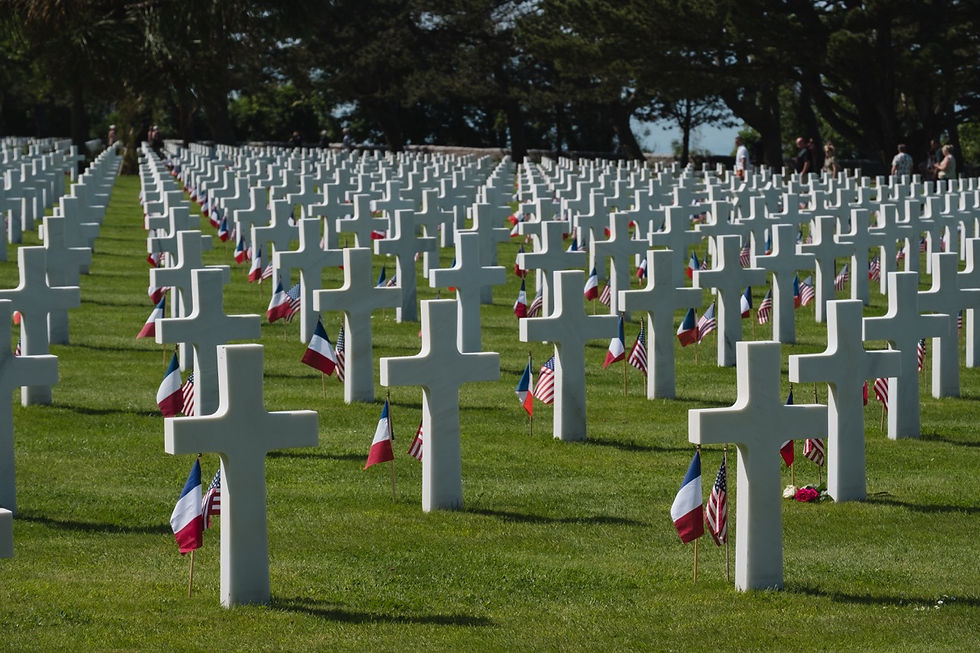
The next 20+km cut inland through rolling farmland towards Omaha Beach. The GPX takes you to the American Cemetery, which was one of the main points of the trip. You’ll need to lock your bike in the designated bike parking, but it felt very secure and we used simple hip locks. It’s a powerful stop, especially knowing that the quiet landscapes and beaches you’re riding through today came at such an enormous cost. After paying your respects, the route continues down to Omaha Beach, where there are multiple museums and monuments along the coast.
The route heads back to Bayeux since that's where the train back leaves from back to Paris. This does mean around 12km of backtracking before cutting south and inland. Once you turn off to the south, it is a nice paved bike path for about 10km into town.
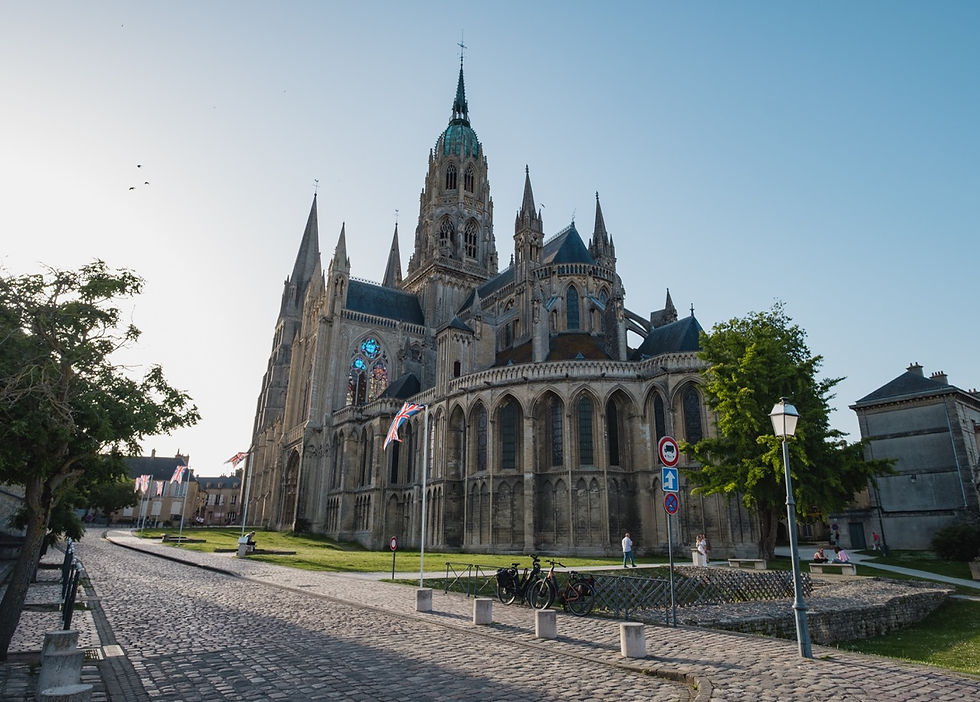
Bayeux itself was spared bombing during the war, so its medieval center, including the Notre-Dame Cathedral, is fully intact. You can finish your adventure here with a glass of Calvados, the region's apple brandy, watching the cathedral's stained glass catch the evening light.
Getting Home
Bayeux to Paris by train is a straightforward TER and takes bikes fully built, same as the trip up to Dieppe. Although in busy summer months I usually bring my Fairmean bag just in case. If you haven't dealt with bringing a bike on French trains before, I've written up the rules and what to actually expect here.
Our Trip
Towards the end of May, Sophie, Laura, and I decided to ride the route In 2 days, with Sophie reporting and me shooting photos along the way in hopes of them being used in the final piece. Spoiler alert: they did end up using them as you have seen. While Sophie and Laura took the train up from Paris to Dieppe, I was in the middle of a training block for the Bright Midnight and wanted an extra day of mileage, so I rode out the day before to meet them instead. I did the typical Paris-to-Dieppe route I've already written up here, which put a full day in my legs before the trip even officially started. This is a great add-on if you're looking for a longer trip.
What We Brought
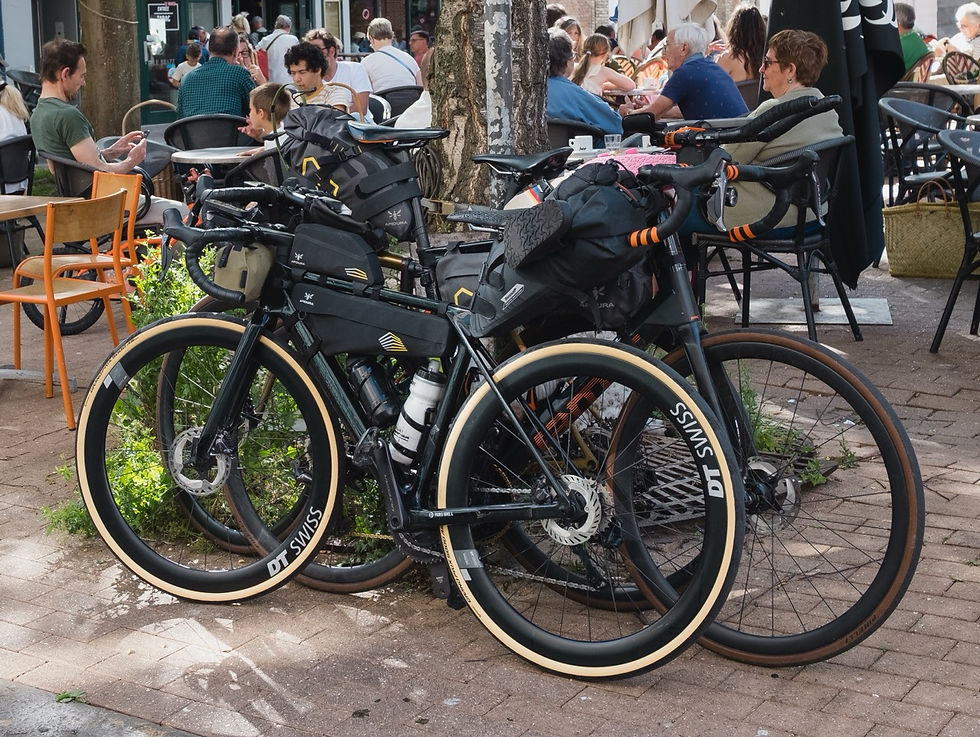
We stayed in B&Bs the whole way, which cuts out camping gear entirely, and doing the route in two days instead of four meant packing light was easy for us. There was no support van, no luggage service, just what fit on the bikes themselves. Besides cycling kit, we each brought a pair of sandals, shorts, a T-shirt, and basic toiletries. You won't be let into a 3 Michelin star restaurant, but that's not what these trips are about.
A good tip for managing your cycling kit for multi-day adventures like this is to bring laundry detergent sheets and simply wash your kit in the sink. Do this as soon as you arrive and then wring them out first before laying them on a towel and rolling everything up tight. Then you can wring the towel harder without fear of damaging your clothes. I also like to step around on the rolled-up towel a bit to draw out as much water as possible before hanging them. If you do this and get them hung up right away, they should dry with no problem, especially if there is a fan in the room or a nice breeze.
For a bit more information on what to bring and where to put it, check out this blog article that covers the basics. You can also see what a more intense gear list looks like for a self-supported trip like I did in Norway for the bright midnight if you plan to do this solo or add on even more.
Read the Full Story
For the restaurants, the B&Bs, and the town-by-town detail, Sophie's full article for The New York Times is here. You can also see more of my photos from the trip there too.


Comments